Fire Alarm Testing and Monitoring: What the Standard Requires
Published July 21, 2026 · Updated November 13, 2026
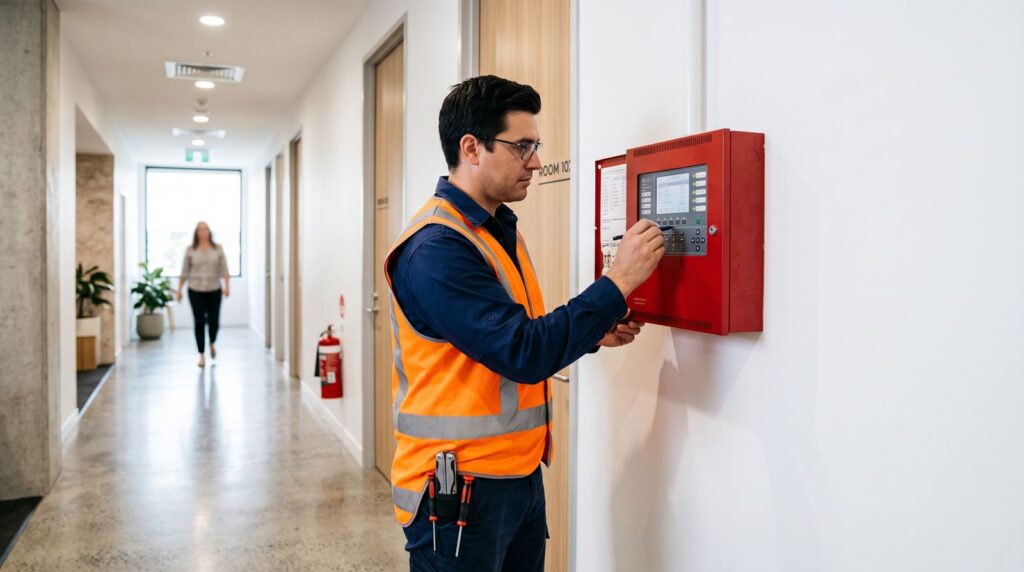
Fire alarm systems need regular inspection, testing and maintenance, and the building owner is responsible for keeping the system in working order. NFPA 72 sets the schedule.
How often
- Annual. Fire alarm systems are thoroughly inspected annually, and most initiating devices, notification equipment and control equipment connected to a supervising station are tested annually.
- More frequent tasks. Some items are inspected or tested weekly, monthly, quarterly or semiannually. Examples include certain batteries, generators, supervisory and waterflow devices.
- Smoke detector sensitivity. Checked within one year of installation, then every other year. After the second test, the interval can extend to as long as five years if readings stay in range.
- Functional testing of smoke detectors. At least two per initiating circuit each year, rotating so every detector is tested within five years.
Monitoring
Many buildings connect the alarm to a monitoring (supervising) station so signals reach responders when no one is on site. Central station circuits are tested at intervals of no more than 24 hours, and a monitored control unit that tests itself weekly can allow manual testing to be annual.
Records and who does the work
Keep written records of inspections and tests, and make them available to the fire code official. Service personnel must meet NFPA 72 qualification requirements. We are not giving price figures here because we do not have a verified source.
Requirements differ by state and city. Your local fire marshal or building department (the “authority having jurisdiction”) has the final say, so confirm with them before acting on anything here.
Sources
- University of Colorado: fire detection and alarm maintenance
- City of Lafayette, Indiana: fire alarm systems
Request free quotes from top-ranked fire protection companies in your area, or browse rankings by state.